
LGR vs Standard Dehumidifier: Which One Should You Rent?
September 12, 2026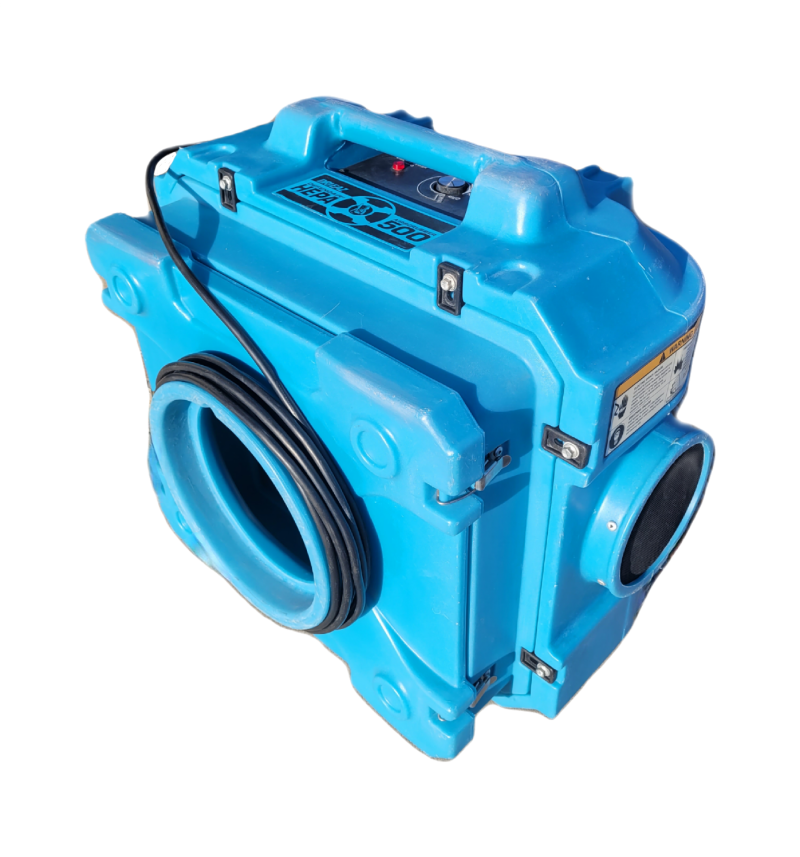
How Long Does It Take to Dry Out Water Damage?
September 12, 2026
What the cost is really made of
The rental for a mold job is not one machine, it is a small set that does different jobs in sequence. What you pay is driven by three things.
- How many machines the job needs, which follows the size of the contained area and how much air has to be filtered and moved.
- How long you need them, since restoration equipment rents by the day, the week and the month, and the weekly and monthly rates work out lower per day than a string of single days.
- Whether the machines are delivered or you collect them, which on a job with several units and no van is not a small thing.
That is why there is no single price. A one room contained job for three days and a multi room job for two weeks are different numbers, and both are set mostly by machine count and duration rather than by any one rate.
The equipment a contained job uses
A mold job is built around keeping the work area sealed off and the air clean, then drying the structure once the affected material is out. The pieces are:
| Stage | Equipment | What it is for |
|---|---|---|
| Seal the area | Sheeting, tape, a zip door | Defines the contained work zone |
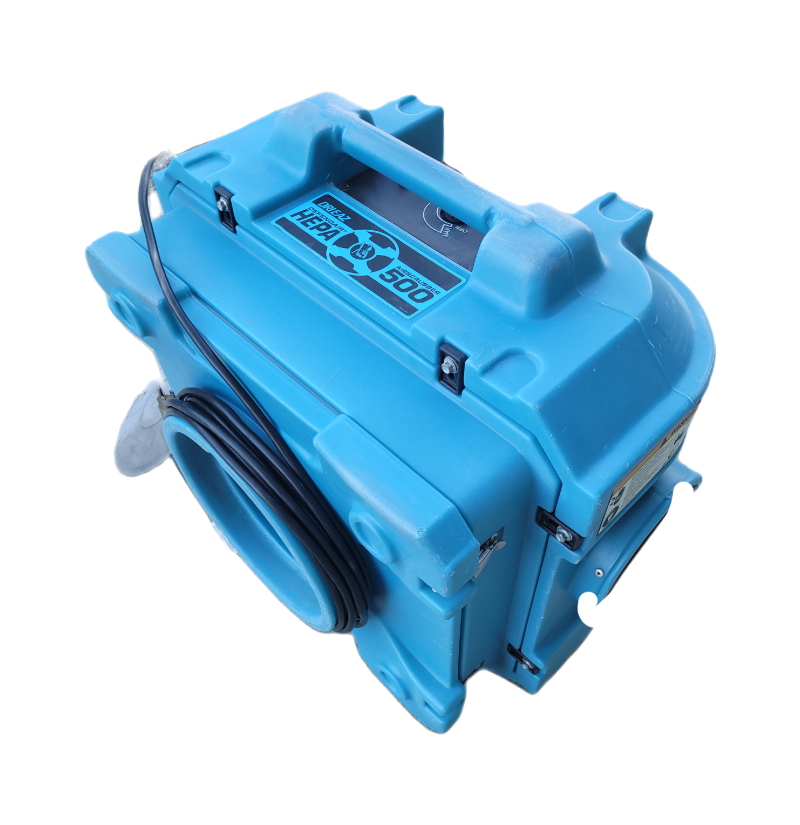
| Control the air | HEPA air scrubber, run as a negative air machine | Filters the air and holds the zone under negative pressure |
| Filter inside | HEPA air scrubber | Lowers the airborne particle load in the work area |
| Dry the structure | LGR dehumidifier and air movers | Dries the framing and substrate once material is out |
| Check the finish | Moisture meter | Confirms the structure is dry before it is closed up |
The two words worth knowing are containment, which means sealing the work area off from the rest of the building, and negative pressure, which means keeping the sealed area at slightly lower pressure than the rooms around it so air leaks in rather than out. That is what stops what you disturb from traveling through the building.
Where the money is well spent
The filtration and the negative pressure are not the place to cut. A HEPA air scrubber ducted to hold the area negative is the single piece that protects the rest of the building, and running a job without it is how a one room problem becomes a whole house problem. If the budget is tight, it is tight somewhere else.
The dehumidifier is the second. Once affected material is removed, the structure behind it is usually wet, and drying it is what stops the mold coming back. Skipping or undersizing the drying stage saves a little now and reproduces the original conditions behind the new wall.
Where people overspend
The common overspend is renting for longer than the readings justify, or renting more filtration than a small contained area can use. Both come from guessing instead of measuring.
The fix is the cheapest tool on the list. A moisture meter tells you when the structure is actually dry, so you return the drying equipment on the day it is done rather than a few days later out of caution. On a weekly rate, a few saved days is real money, and the meter costs almost nothing next to the machines.
Air changes per hour is the other place to size rather than guess. Containment equipment is matched to the volume of the sealed space and how many times that air should be exchanged each hour, not to the floor area. A small zip walled area does not need the filtration a large one does, and sizing it to the real volume keeps the machine count honest.
The piece people forget: make-up air
The cheapest mistake to avoid on a contained job costs nothing to fix and stops the whole setup working if you miss it.
A negative air machine pulls air out of the sealed area to hold it under negative pressure. That air has to come from somewhere. If the containment is sealed too tightly with no inlet, the machine works against a pressure it cannot beat, the airflow drops toward nothing, and the sheeting sucks tight like a drum. It looks like the machine has failed. It has not. It has nowhere to draw from.
The fix is a deliberate gap or a filtered inlet, so air enters where you chose rather than wherever the plastic gives way first. It is not an extra rental, it is a detail of how the containment is built, and knowing it beforehand saves a call out and a wasted afternoon. When you set up the zip wall, leave the machine somewhere to breathe.
The Los Angeles angle
Two local things affect a mold job here. Damp indoor spaces are a health matter, not only a building one, which is the reason to keep the area contained and to finish the drying properly rather than stopping when it looks clean. The EPA’s guide to mold remediation in larger buildings is a fair starting point on how the work is meant to be staged.
The building stock also matters. Plaster over lath in older parts of South and Central Los Angeles holds moisture longer than drywall, so the drying stage after removal runs longer here than a generic estimate suggests, and the rental should account for it.
Renting the set, not chasing the pieces
The reason to rent rather than buy is that a mold job needs this equipment for a short defined stretch and then not again, and it needs the filtration and drying sides together and in the right order. Renting containment and filtration equipment alongside the drying machines from one place means the set arrives together rather than being chased from three suppliers mid job. Delivery and pickup across Los Angeles keeps a contained job from stalling on a missing piece.
To get a real number rather than a guess, have the size of the area to be contained, roughly how long the job will run, and whether you need delivery. Call (310) 493-2162 with those and the set can be matched to the job.
