
When Do You Actually Need an Industrial Dehumidifier?
September 12, 2026How Equipment Rentals Reduce Startup Risk for Restoration Business Owners
January 9, 2026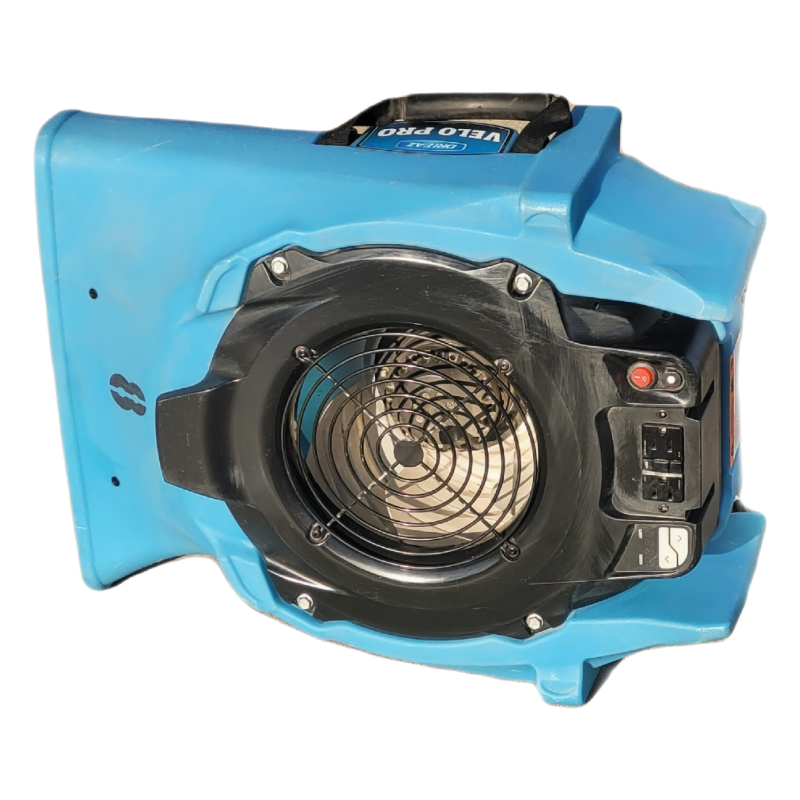
Start with the surface, not the floor plan
An air mover speeds up drying by pushing fast air across a wet surface. The water is not the obstacle. The obstacle is a thin, still layer of saturated air that forms right against anything wet and then stops the drying, because the air touching the surface is already holding all the moisture it can. Break that layer with moving air and evaporation starts again.
So the count follows the wet surface. A supply line that soaked one wall and a two foot strip of floor is a small job. The same size room with water tracked under the flooring across its whole footprint is a large one, even though the room did not change.
A common starting point in the trade is one air mover for every ten to sixteen linear feet of wet wall, plus coverage for the wet floor, then adjust up for how much absorbent material is holding water. Treat that as a starting figure, not a rule. The readings decide the rest.
The second number: air changes per hour
The other half of sizing is how many times the air in the room gets replaced in an hour. This is called air changes per hour, and it matters because the moisture the air movers lift off the surfaces has to be carried away and pulled out of the air, or it just settles back down.
Air movers move air. They do not remove water. That job belongs to the dehumidifier working alongside them. If you flood a room with air movers but the drying capacity in the space cannot keep up, the humidity in the room climbs, and higher humidity slows evaporation at every wet surface at once. The machines get louder and the room dries slower.
That is the single most common mistake with air movers: treating more as better. Past the point your dehumidification can handle, each extra machine makes the job worse, not faster.
Centrifugal or axial, they do different jobs
Rental listings use the two words as if they mean the same thing. They are built for opposite tasks.
- A centrifugal air mover takes air in and throws it out in a narrow, high speed stream that hugs a surface. This is the machine for driving air tight along a wall, under a cabinet kick, or across a floor. It is the workhorse for surface drying.
- An axial air mover pushes a large volume of air straight through, like a fan. Lower speed, much more air. It is better for moving a lot of air through a whole space or venting a room.
A good drying setup usually wants both, doing separate jobs. Using axial units to do a centrifugal unit’s surface work is a common reason a job stalls with plenty of equipment on site.
A rough guide by situation
| Situation | Sensible starting point |
|---|---|
| One wet wall, small floor area, someone on site | Two to three centrifugal units aimed along the wet surfaces |
| A whole room wet, walls and floor | One centrifugal per ten to sixteen feet of wall, plus floor coverage |
| Water under the floor covering | Surface air does little until the covering is lifted or air is delivered underneath |
| Open plan or split level | Add axial units to keep air circulating, the box room rule breaks down |
Every row assumes a dehumidifier is running and keeping up. Without that, halve your instinct and add drying capacity instead.
The Los Angeles wrinkle
A lot of this city sits on slab-on-grade foundations, common across post-war tracts. On a slab, water does not drain down. It spreads sideways under the floor covering and ends up in places no machine in the room can see. On those jobs, air across the top of an intact floor does almost nothing. Either the covering comes up, or air has to be pushed underneath it, and the machine count on the floor plan is counting the wrong thing.
The other local factor is the marine layer. Coastal and southern parts of the city hold more humidity in the outside air than inland areas, which slows drying and puts more of the load on the dehumidifier. The same set of machines finishes at a different speed depending on where in the city the building sits.
How to know you got the count right
You do not guess, you measure. A moisture meter reads the water content in the material, and the number falling day over day is the only proof the setup is working. If the readings drop steadily, the count is right. If they flatten while the room feels humid, you have too little drying capacity for the air movers you are running, not too few machines.
For most single room losses caught early, a small number of the right machines aimed at the right surfaces beats a room packed with equipment. Renting air movers by the day and week lets you match the count to the job and hand the machines back when the readings say the structure is dry, rather than owning a stack of units for the one week a year you need them. Delivery and pickup across Los Angeles keeps the machines moving between jobs instead of sitting in a garage.
Drying done properly also heads off the bigger problem. When wet material sits too long, it stops being a drying job and turns into a mold job. The federal guidance on keeping indoor spaces dry to prevent that is worth a read in the EPA’s brief guide to mold and moisture.
To size a job over the phone, have three things ready: what got wet, how much of it is soft absorbent material, and whether the water reached under the flooring. Call (310) 493-2162 with those and the count sorts itself out.
