
How Long Does It Take to Dry Out Water Damage?
September 12, 2026
How Many Air Movers Do You Need to Dry a Room?
September 12, 2026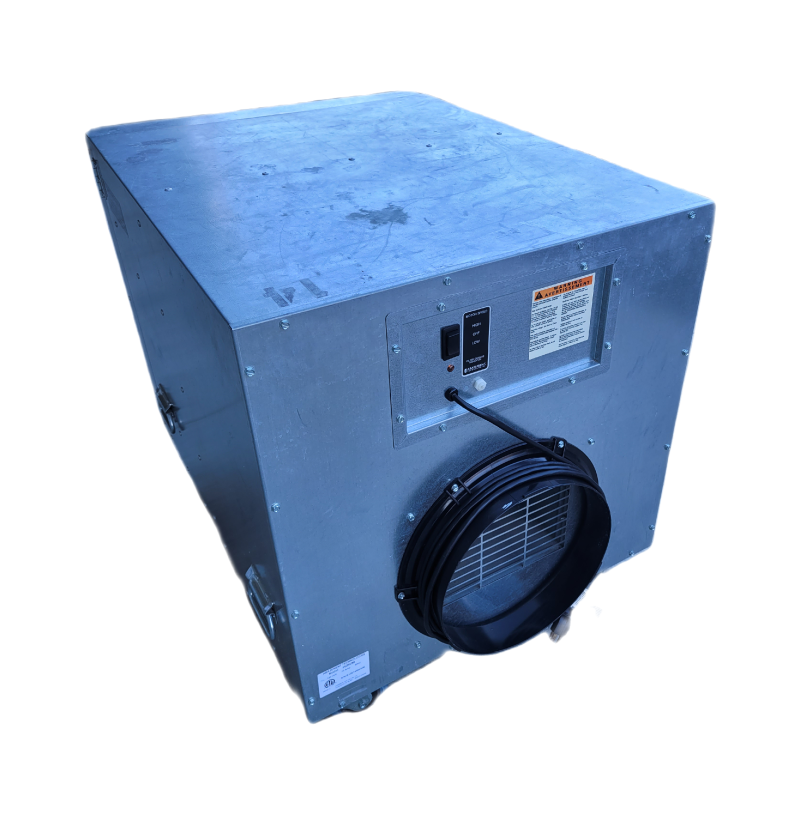
Sign one: a large or open wet area
The clearest reason is simple volume. A single wet bathroom and a wet floor plate across a whole commercial suite are different jobs, and the second one needs a machine that can pull water out of far more air.
The useful way to size this is not floor area, it is the volume of the space, because a room with a high ceiling holds far more air than its floor plan suggests. A warehouse bay, a two story open entry, or a large open plan floor all hold more air than the square footage hints at, and that is where a larger machine earns its place.
Sign two: deep material holding a lot of water
Some materials give their water up in days. Others hold it for weeks, and those are what push a job toward more capacity.
Concrete is the main one. A slab that has taken on water releases it slowly over weeks, not days, and on the slab-on-grade foundations common across post-war Los Angeles that is a routine situation rather than a rare one. Plaster over lath, found in older parts of South and Central Los Angeles, behaves the same way. When a lot of slow release material is wet, you need a machine that can keep working steadily for a long stretch without falling off.
Sign three: the job runs long or runs cold
Time and temperature both push toward bigger, more capable machines.
A loss that will clearly run past a few days needs equipment that stays effective deep into the job, when the air has dried but the material has not. And a genuinely cold space is its own case. Standard refrigerant machines lose ground as it gets cold, because the coil that pulls water can ice up. That is the point where the job moves past even a large refrigerant unit and into desiccant equipment, which dries differently and holds up in cold, very dry conditions. Cold is rare inside a Los Angeles loss, but an unheated structure opened up on a winter night can get there.
Sign four: what the building can actually power
This is the constraint nobody mentions and the one that ends more plans than any other. A large machine needs the electrical supply to run it. In an older Los Angeles residential building, the biggest units may need more power than the panel can give, and the machine that was right for the water load simply cannot be plugged in.
The practical answer on those jobs is often several mid size machines on separate circuits rather than one large one. The limit is the panel, not the moisture. It is worth knowing before the equipment arrives, not after.
A short checklist
| Reach for more capacity when | A standard machine is fine when |
|---|---|
| The wet area is large or the ceiling is high | One or two normal rooms are affected |
| Concrete, slab or plaster is holding water | The wet material is mostly drywall and finishes |
| The job will clearly run more than a few days | The loss is small and expected to dry fast |
| The space runs cold | The space stays at normal indoor temperature |
| Check the panel can power it first | A standard outlet is all that is available |
If two or more of the left column are true, size up. If only one is, a standard or LGR machine on a normal circuit usually handles it.
One big machine, or several smaller ones
Reaching for capacity does not always mean one large machine. Often the better answer is two or three mid size units, and the reason comes back to the power point above.
Several smaller machines spread the electrical load across separate circuits, so an older building can actually run them. They also let you put drying capacity where the water is rather than in one corner, which matters on a spread out loss. And if one fails, the job does not stop.
One large machine wins when the space is genuinely big and open, the power is there to run it, and you want fewer units to place and monitor. On a warehouse bay or a large open floor that is the cleaner setup.
The point is that industrial is not automatically the same as one big box. Sizing is about total capacity matched to the water and the building, and two right sized machines often beat one oversized one that the panel cannot feed anyway.
The seasonal pattern in Los Angeles
Big losses here cluster. The city is dry through summer, with most rain falling between November and March, so through the dry months the losses are steady plumbing failures that ordinary machines absorb. Then a winter storm system comes through and several large losses land in the same few days across the basin. You can see that rainfall pattern in the NOAA climate record for the region, and it is the reason capacity gets tight in storm week and worth arranging before you are competing for it.
Renting the capacity you need, when you need it
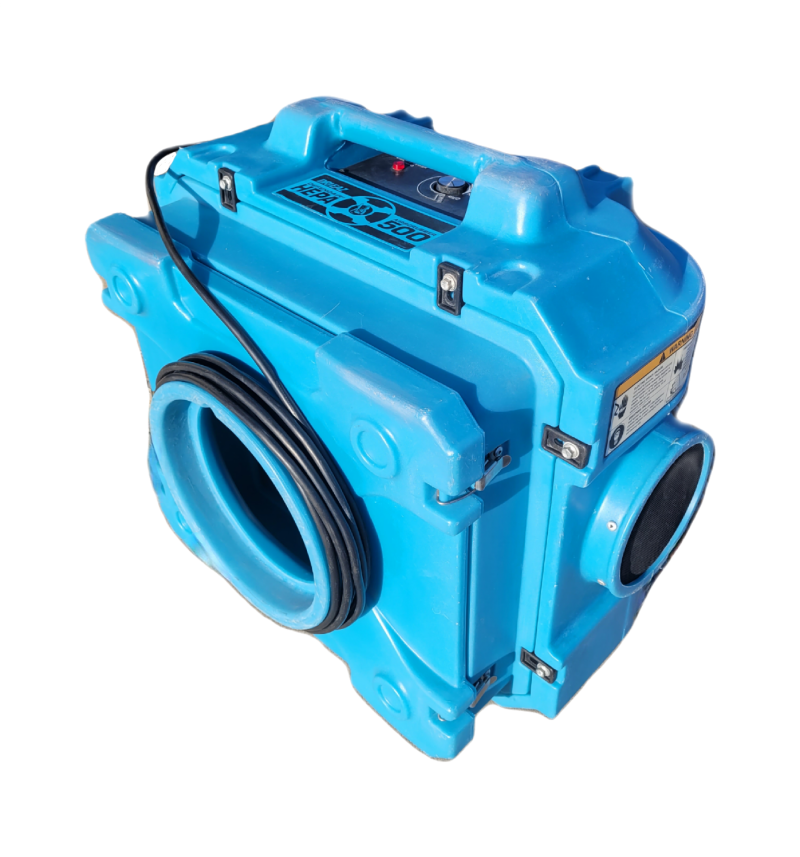
Owning a large dehumidifier is a poor deal for most operators, because it sits idle for most of the year and carries its cost the whole time. Renting a large capacity dehumidifier for the stretch of a job means you pay for it only while a loss needs it, and hand it back when the readings say the structure is dry. Delivery and pickup across Los Angeles is part of that.
Before you call (310) 493-2162, work out the volume of the wet space, what slow release material is involved, and what power is available on site. Those three answers decide whether this is a standard job or a big machine job.
